
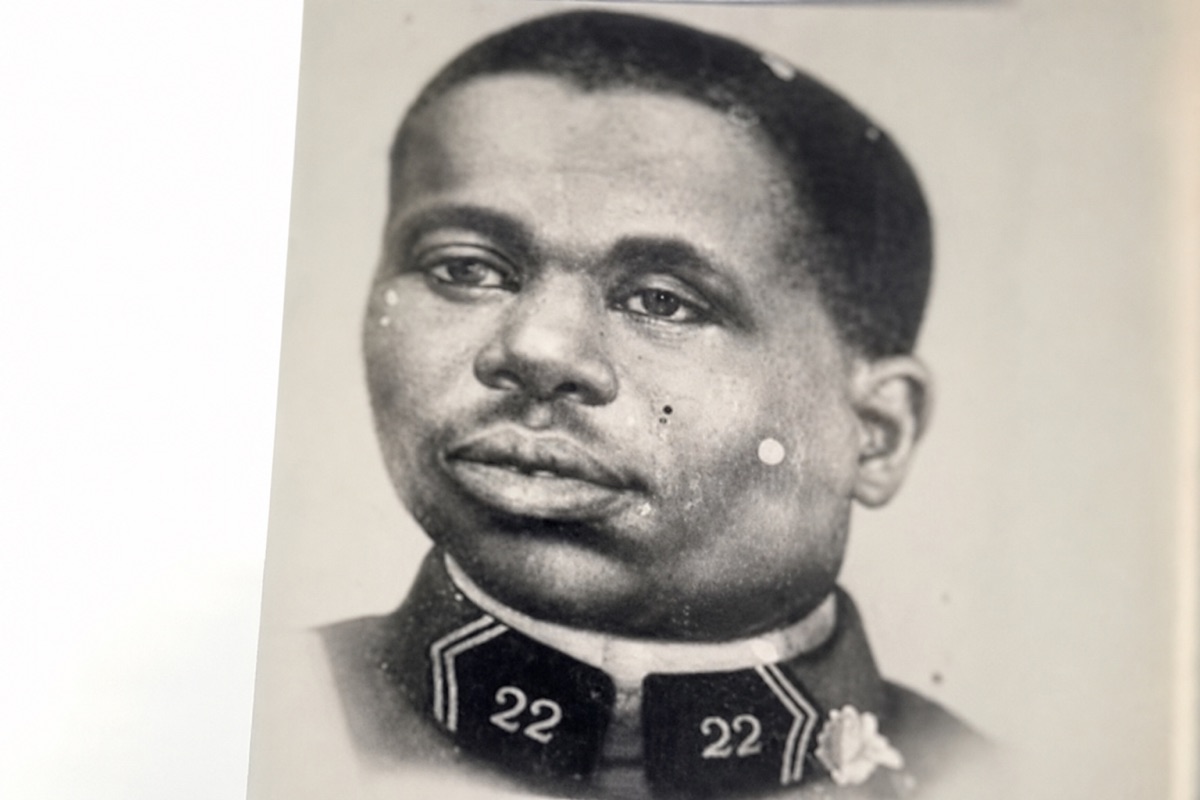
A hundred years after a handful of demobilised soldiers and clerks gathered in a modest Paris hall, the association they founded is preparing to mark a centenary that few of its early members could have imagined. The Amicale des originaires de l’Afrique-Équatoriale française, established on 21 July 1926 by André Grénard Matsoua, now presents itself as a custodian of African values and a vehicle for renewed pan-African ambition. As the date of its founding approaches once more in July 2026, the organisation is recasting a colonial-era solidarity network as a contemporary intellectual and moral project, anchored in the memory of a man whose trajectory still resonates in Congo-Brazzaville.
From a Mutual-Aid Society to a Political Vision
The Amicale was conceived in an unglamorous register. Its first purpose was practical: to assist Africans discharged from military service in France, men often left adrift in a metropolis that had used their labour and their lives but offered little in return. Yet alongside this charitable mission lay a more ambitious design — the formation of an African elite capable of accelerating the evolution of France’s colonies towards self-determination. That dual character, at once a welfare body and a school of consciousness, distinguished the association from the many expatriate clubs of interwar Paris and gave it a political weight its founders gradually came to embrace.
What began as mutual aid did not remain so for long. The intellectual climate of the era, and Matsoua’s own contacts with sections of the French left, pushed the organisation steadily towards an explicitly political horizon. The transformation was incremental rather than abrupt, but its direction was unmistakable: the Amicale was becoming a movement, and the cause it adopted was nothing less than the independence of African peoples.
A Founder Shaped by Empire’s Contradictions
André Grénard Matsoua’s life encapsulates the contradictions of the colonial order he would come to challenge. Born in 1899 at Manzakala, he came of age within the very administration that governed the colonies, before leaving for Paris in 1923. There he enlisted in the Senegalese tirailleurs and took part in the Rif War, serving an empire whose logic he would later contest. That itinerary — from colonial subject and imperial soldier to organiser of an emancipatory project — lent his subsequent activism an authority born of intimate knowledge.
It was in Paris, amid intellectual circles sympathetic to anti-colonial argument, that Matsoua’s thinking matured. The encounter between his experience and these new ideas converted a relief association into a political instrument, one whose aims could not be reconciled with the assumptions of French rule.
Repression That Strengthened the Cause
The colonial authorities grasped the threat. Matsoua was arrested in December 1929 and brought to trial in April 1930, receiving a sentence of three years’ imprisonment. The intention was plainly to decapitate a nascent movement. The effect was close to the opposite. Far from collapsing under official pressure, the Amicale expanded, its sections multiplying across Central Africa even as its founder endured detention. The episode illustrates a pattern familiar to historians of anti-colonial mobilisation: repression, by conferring legitimacy and martyr-like stature, frequently accelerates the very dynamics it seeks to halt.
That resilience helps explain why the name of Matsoua retained a durable hold on the political imagination of the region long after the events of 1929 and 1930. The association he created proved more enduring than the punishment designed to suppress it.
Reclaiming a Legacy for a New Century
A hundred years on, the Amicale frames its purpose in terms that consciously echo its origins while addressing present concerns. It speaks of the restoration of African values and the promotion of pan-Africanism, presenting these as the modern continuation of Matsoua’s struggle for the equality and flourishing of African peoples. The vocabulary is deliberate: it situates a centenary not as an exercise in nostalgia but as a summons to contemporary engagement.
The choice carries a particular charge in Congo-Brazzaville, where Matsoua’s memory has long exceeded the bounds of ordinary historical commemoration. By tying its centenary to the language of values and continental solidarity, the association positions itself within a wider debate about identity, governance and Africa’s place in the world — themes that animate intellectual life well beyond its own membership.
Whether the renewed emphasis on pan-Africanism translates into sustained influence remains to be seen. What is clear is that, as 21 July 2026 approaches, the Amicale is choosing to read its hundred-year history not as a closed chapter but as an unfinished argument, with Matsoua’s example offered once more to a generation invited to take it up.
