
A strategic compass toward SDG 6
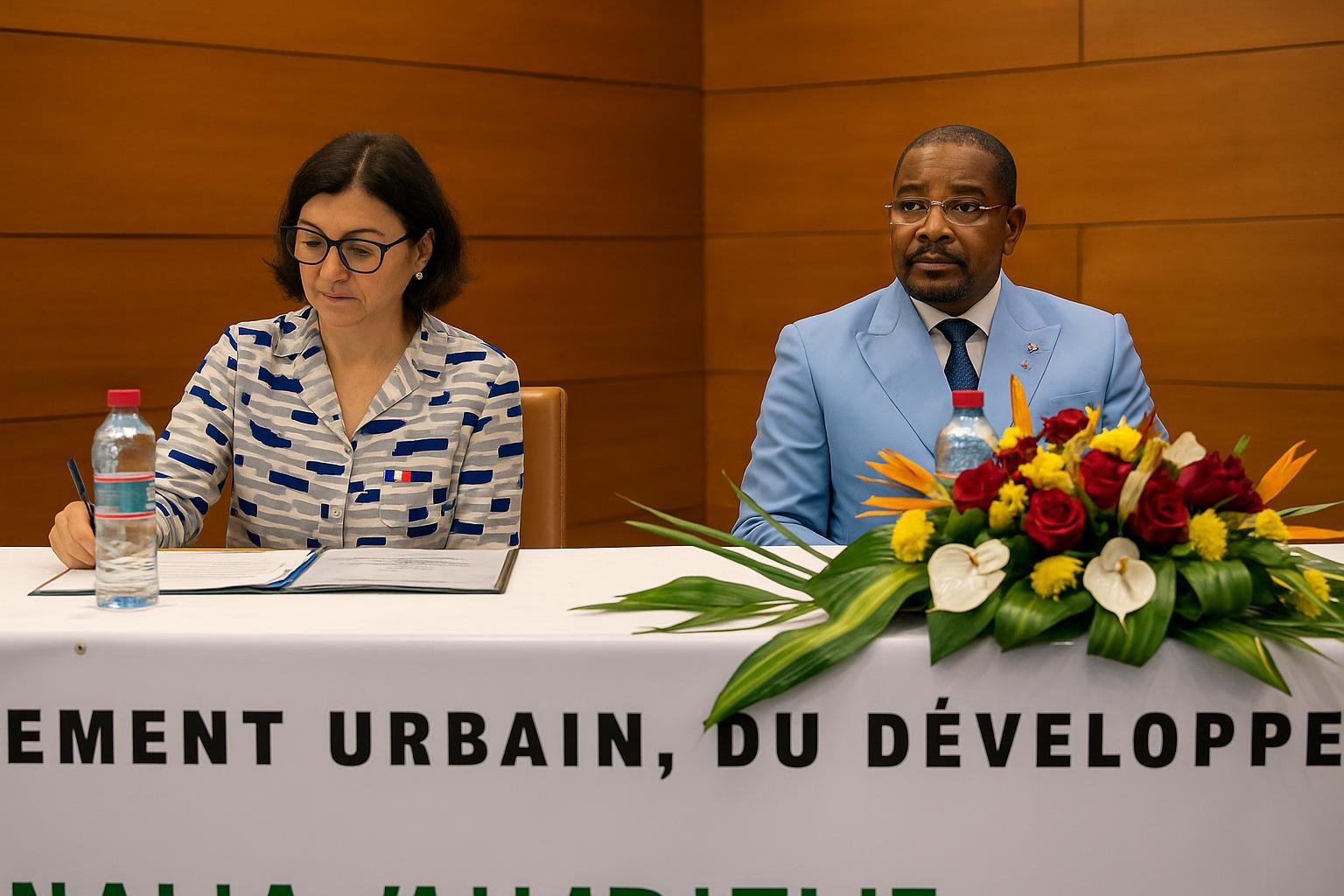
In the bright auditorium of Brazzaville’s ministry compound, officials, mayors and development partners rose to their feet on 14 October as Minister Juste Désiré Mondelé declared the National Sanitation Policy 2024-2030 formally adopted. The document, he stressed, is more than a technical annex: it is the Government’s ‘strategic compass’ for meeting the Sustainable Development Goals, in particular SDG 6 on water and sanitation, while reinforcing the President’s Vision 2030 for an emergent Congo.
The policy sets a quantifiable ambition: by 2030, reduce sanitation-related morbidity by half in urban centres, recover 60 percent of municipal solid waste and extend safe faecal sludge management to every arrondissement of Brazzaville and Pointe-Noire. Although the headline targets were circulated during the first national sanitation conference in 2022, their validation now gives local authorities a legal mandate to align budgets and by-laws.
People-centred and decentralised implementation
Unlike earlier programmes driven almost exclusively from the capital, the new roadmap channels responsibility to departments and communes. The policy calls for locally drafted action plans to be costed, monitored and publicly reported every eighteen months. Delegations from Oyo, Dolisie and Ouesso, present at the workshop, welcomed what Mayor Dieudonné Bantsimba described as ‘a long-awaited return to proximity management’, arguing that only municipalities understand the micro-realities of informal settlements vulnerable to flooding.
Civil-society networks such as the Association congolaise pour l’Eau, l’Assainissement et l’Environnement committed to community-led total sanitation campaigns to change entrenched behaviours around open defecation. According to UNICEF resident representative Mariavittoria Ballotta, behaviour change remains the ‘make-or-break variable’ because infrastructure alone cannot secure health gains.
Financing engine for a circular economy
The policy’s economic chapter introduces blended-finance instruments designed with the African Development Bank. A guarantee fund, to be housed in a leading national commercial bank, will de-risk loans to small and medium enterprises specialising in waste sorting, compost production and plastic up-cycling. AfDB country manager César Mba Abogo confirmed that discussions are advanced for a first-loss tranche of five million dollars, potentially unlocking ten times that amount in private capital.
Minister Mondelé argues that sanitation is now recognised as a ‘market of opportunities’, capable of generating up to 8 000 direct green jobs by 2028. Young engineers from the National Polytechnic School have already prototyped biodigesters that convert organic waste into cooking gas, an innovation the Government plans to scale through public-private partnerships.
Strengthened governance and accountability
A recurrent criticism of previous initiatives was fragmented oversight scattered between the ministries of Health, Environment and Urban Development. The new framework therefore establishes a single High Council for Sanitation chaired by the Prime Minister and advised by an independent observatory of academics and professional associations. Annual scorecards will be published in the Official Gazette, a transparency clause welcomed by international partners.
Legal experts note, however, that the pending Code de l’Assainissement is vital to secure enforcement powers. Drafted with technical input from the World Health Organization, the bill awaits parliamentary debate during the next ordinary session. Until then, regulatory gaps—such as tariff setting for sludge emptying—will continue to rely on ministerial decrees.
À retenir
The policy’s approval marks the first time the Republic of Congo articulates a unified sanitation vision linked to explicit health, climate and employment indicators. It formalises multi-level governance, introduces innovative financing and places human dignity at the centre of urban planning. Bridging the implementation gap now hinges on quick adoption of the sanitation code and on disciplined monitoring of local action plans.
Le point juridique/éco
From a legal standpoint, the absence of a dedicated sanitation statute has long complicated contract enforcement for service providers. The forthcoming code is expected to define concession models, user-fee ceilings and polluter-pay provisions aligned with CEMAC regulation. Economically, the waste-to-resource approach could diversify non-oil revenues and plug into the continental African Continental Free Trade Area market for secondary raw materials, provided quality standards meet regional norms.
Outlook beyond 2025
International observers note that Brazzaville’s policy coincides with renewed global momentum following the 2023 UN Water Conference. By positioning sanitation as a cross-cutting driver of human capital, Congo signals that the post-pandemic recovery is inseparable from environmental stewardship. For Minister Mondelé, success will be measured ‘in the smiles of children free from water-borne disease and in the entrepreneurs who turn yesterday’s waste into tomorrow’s wealth’. With political will, technical backing and community ownership converging, the country’s clean-city horizon appears within reach.
